Wrong Tool, Wrong Game: How Your Controller Choice Is Quietly Costing You Wins
Here's a scenario that probably sounds familiar: you drop serious cash on a premium controller — maybe a Scuf, a PowerA Fusion, or even Sony's own DualSense Edge — and your gameplay still feels off. Your shots aren't landing. Your combos are dropping. Your platforming feels sloppy. You assume it's a skill issue and grind harder. But what if the controller itself is the problem?
This isn't about bad hardware. It's about mismatched hardware. Different controller designs are quietly optimized for different genres, and playing a fighting game with a controller built for shooters is like trying to run a marathon in cleats. Technically possible. Practically painful.
Let's get into the specifics.
The Anatomy of a Controller — And Why It Actually Matters
Before breaking down genres, it helps to understand what variables even exist inside a controller that affect performance. Most gamers think about buttons and sticks, but the real differentiators are:
- Stick tension and dead zones — How much resistance your thumbsticks have and how much movement is ignored before input registers
- Trigger sensitivity and travel distance — How far you have to pull a trigger before an action fires, and whether it's analog or effectively digital
- D-pad precision — Whether the directional pad registers clean cardinal inputs or bleeds diagonally
- Button actuation force — How hard you have to press face buttons for a response
- Layout geometry — Where your thumbs rest naturally relative to the sticks and buttons
None of these are one-size-fits-all. And different genres punish different weaknesses.
Shooters: It's All About the Sticks
First-person and third-person shooters are the most stick-dependent genre on console. Precision aiming requires consistent, predictable stick response — which means dead zones and sensitivity curves matter enormously.
Controllers like the Xbox Elite Series 2 dominate here because they let you tune tension and dead zones directly. Tighter sticks reduce the micro-wobble that causes crosshair drift during long-range engagements. Shorter trigger stops mean you're firing faster without sacrificing analog depth for driving or other in-game mechanics.
The DualSense's adaptive triggers, while genuinely impressive as a haptic feature, introduce inconsistent resistance that can throw off trigger timing in competitive shooters. If you're grinding ranked in Call of Duty or Apex Legends, that extra resistance is a liability, not a feature. Many serious players disable adaptive trigger effects entirely in game settings.
Data from community-run controller testing (including aggregated results from sites like Controller Chaos and various FPS-focused Discord servers) consistently shows that players using high-tension, short-dead-zone setups register measurably faster target acquisition times — sometimes shaving 40-60ms off average time-to-kill.
Fighting Games: The D-Pad Decides Everything
In fighting games, the thumbstick becomes almost irrelevant. Quarter-circle inputs, dragon punch motions, and charge partitions all depend on clean, fast directional inputs — and that's where the D-pad becomes the entire conversation.
The Xbox Series X controller's D-pad is widely considered one of the best on a stock gamepad right now, offering faceted edges that help your thumb find cardinal directions without looking. Sony's DualSense D-pad is serviceable but slightly mushier, which can cause diagonal bleeds during fast inputs.
But here's the real talk: if you're serious about fighting games, neither of these is actually the right answer. Arcade sticks and leverless controllers (like the Hitbox) are purpose-built for this genre, offering the cleanest possible directional inputs. Players who switched from standard pads to leverless setups in games like Street Fighter 6 or Tekken 8 have reported dramatic improvements in input consistency, particularly for charge characters and motion-heavy playstyles.
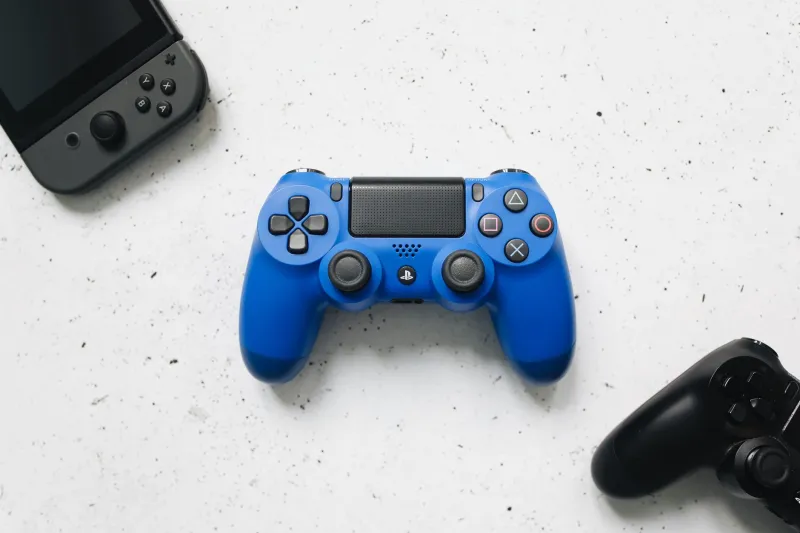
For pad players who can't or won't make the switch, the PlayStation DualShock 4 actually has a dedicated following in the FG community specifically because of its D-pad feel — and many players still use it via compatibility mode.
Platformers: Tension, Travel, and Thumb Placement
Platformers are sneaky. They look simple but demand a very specific kind of physical relationship between your thumb and the left stick. Games like Celeste, Hollow Knight, or Astro Bot require rapid, precise directional changes — and controller geometry plays a huge role here.
The Nintendo Switch Pro Controller has a loyal platformer following, partly because the symmetric stick layout (both sticks centered on the controller face) keeps wrist fatigue lower during extended sessions. It also has a softer stick resistance that makes quick micro-adjustments feel more natural.
The asymmetric layout of Xbox controllers — where the left stick sits higher than the right — works well for shooters but can feel less intuitive for fast platforming, where your left thumb is doing most of the heavy lifting. It's not a dealbreaker, but it's a real ergonomic consideration.
Button actuation also matters here. Lighter face buttons let you execute jumps and dashes faster with less finger fatigue. The DualSense's face buttons have a slightly longer travel distance than some competitors, which is almost unnoticeable in slow games but can stack up during frame-tight platforming sequences.
RPGs: Comfort Over Performance
This is the one genre where the "best" controller is largely about personal comfort rather than measurable performance metrics. RPGs are rarely twitch-dependent, so sensitivity curves and D-pad precision matter far less.
What matters in RPGs is long-session ergonomics. You might be holding a controller for four or five hours in a single sitting. Grip design, weight distribution, and button placement for menu navigation all become the dominant factors.
The DualSense actually shines here. Its ergonomic shape is genuinely comfortable for extended play, and the haptic feedback adds immersion to exploration and combat in ways that don't require competitive-level precision. If you're working through Baldur's Gate 3, Final Fantasy XVI, or Elden Ring in marathon sessions, comfort is your stat to optimize — not millisecond response time.
The Takeaway: Match Your Gear to Your Game
There's no universally superior controller. What there is, though, is a controller that's right for what you're actually playing — and the difference is measurable, not theoretical.
If you primarily play shooters, prioritize adjustable dead zones and short trigger stops. Fighting games? Invest in a quality D-pad or go leverless. Platformers reward lightweight, ergonomic designs with responsive buttons. RPGs just need to be comfortable enough that your hands don't hate you by hour four.
The next time your performance plateaus, before you buy another aim trainer subscription or rewatch tutorial videos, take a hard look at what's actually in your hands. Sometimes the upgrade isn't your skills — it's your setup.