Old Games, New Machines: Which Console Actually Does Backwards Compatibility Right?
Let's be honest — backwards compatibility is one of those features that sounds boring until the moment you actually need it. Maybe you skipped a console generation, maybe a beloved older title just popped back into your brain at 11pm on a Tuesday, or maybe you're just not ready to retire a $70 library of games you barely touched. Whatever the reason, how well your console handles older games matters a lot more than the spec sheets suggest.
So we put all three major platforms — PlayStation 5, Xbox Series X/S, and Nintendo Switch — under the microscope. Not just to count which one has the biggest pile of compatible games, but to really dig into how they handle those older titles. Load times, frame rate boosts, visual upgrades, preservation philosophy — all of it is on the table.
Xbox Series X/S: The Gold Standard (For Now)
Microsoft has been shouting about backwards compatibility for years, and honestly? The bragging is mostly earned. The Xbox Series X/S supports thousands of titles going back to the original Xbox, and that's not a typo — we're talking games from 2001 running on hardware released in 2020. The backward compatibility team at Microsoft has put in serious work here, using emulation layers that don't just run old games but actively improve them.
The Auto HDR feature is a standout. It intelligently adds high dynamic range to games that never had it natively, and while results vary, the improvement on many older titles is genuinely impressive. FPS Boost is the other big one — select games get their frame rates doubled or even quadrupled without any developer involvement. Titles like Far Cry 4 and Fallout 4 running at 60fps on Series X, when they originally capped at 30, is a real quality-of-life upgrade that's hard to overstate.
Load times are also dramatically faster for older titles, thanks to the console's NVMe SSD. A game that used to take two minutes to load on Xbox One might be in the menu in under 20 seconds on Series X.
The weak spot? Not every game gets the VIP treatment. FPS Boost and Auto HDR aren't universally applied, and some older titles still have bugs or compatibility quirks that Microsoft hasn't patched. The system is impressive, but it's not magic.
PlayStation 5: Strong, But With Some Fine Print
Sony's approach to backwards compatibility has improved a lot since the PS5 launched, but it still comes with more asterisks than Microsoft's solution. The good news: the vast majority of PS4 titles work on PS5, and many of them load faster and run more smoothly thanks to the hardware jump. Sony's Game Boost feature can push supported PS4 games to higher and more stable frame rates, which is a welcome touch.
The bad news is that PS3, PS2, and PS1 games are essentially locked behind PlayStation Plus Premium, Sony's top-tier subscription tier. You're not running those classics from a disc or a digital purchase you already own — you're streaming most of them or downloading curated versions through the service. That's a meaningful limitation, especially for collectors or players who want to revisit a specific obscure title Sony hasn't bothered to add to the catalog.
It's also worth noting that Sony's emulation for older PlayStation hardware is selective. Not everything is available, and the company hasn't shown the same commitment to a comprehensive legacy library that Microsoft has. The PS5 handles PS4 games beautifully, but anything older is more of a curated museum experience than true open backwards compatibility.
Where Sony does shine is in the upgrade path for current-gen titles. Many PS4 games received free or discounted PS5 upgrades with improved resolution, frame rates, and DualSense haptic support. That's a different kind of backwards compatibility — one focused on modernizing recent games rather than preserving ancient ones — and Sony does it well.
Nintendo Switch: A Completely Different Animal
Comparing Switch backwards compatibility to PS5 or Xbox is a little like comparing apples to a vintage arcade cabinet. The Switch doesn't play Wii, Wii U, DS, or 3DS cartridges. Hardware backwards compatibility, in the traditional sense, is simply not a feature Nintendo built into the system.
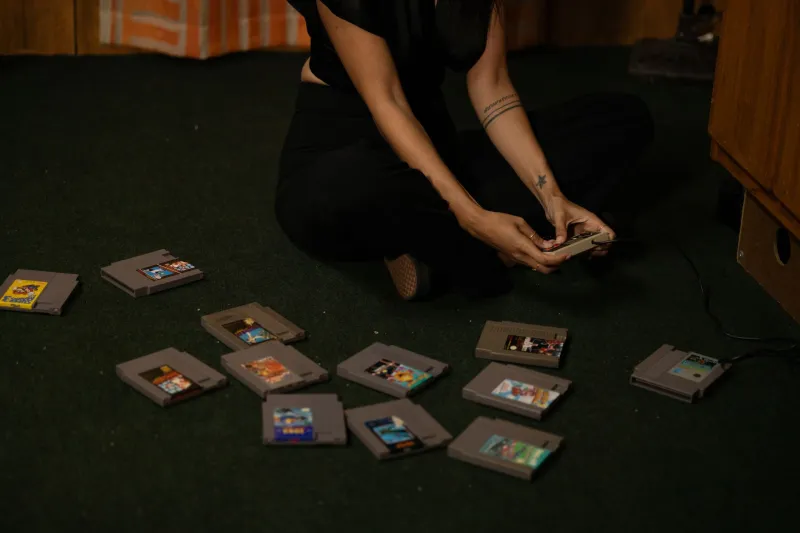
What Nintendo offers instead is Nintendo Switch Online, a subscription service that includes libraries of NES, SNES, Nintendo 64, Game Boy, Game Boy Advance, and Sega Genesis games. The Expansion Pack tier adds N64 and GBA titles, along with some Nintendo 64 games that have been updated with online multiplayer support.
It's a charming setup, but it has real limitations. The libraries are curated and slow-growing. Nintendo controls exactly which games you get access to, and notable gaps exist across every catalog. There's no way to import your old Virtual Console purchases from the Wii or Wii U, which frustrated a lot of loyal Nintendo fans when the service launched.
The emulation quality is generally solid, though some N64 titles launched with performance issues that Nintendo has since patched. And honestly, playing Super Mario Bros. 3 or The Legend of Zelda: A Link to the Past on a handheld with a modern controller still feels great, regardless of the service's limitations.
For Switch 2, Nintendo has confirmed backwards compatibility with Switch cartridges, which is a smart move — but that's a story for another day.
The Preservation Question Nobody Wants to Answer
Here's the part that doesn't get talked about enough: backwards compatibility isn't just a convenience feature. It's about preservation. Games are cultural artifacts, and the way each company handles legacy titles says something real about how they view their own history.
Microsoft has made the strongest commitment here, both in terms of scope and transparency. The team regularly communicates about what's being added and why certain titles can't be supported. Sony's approach feels more like a business decision — older games as a subscription perk — than a genuine preservation effort. Nintendo sits somewhere in between, clearly aware of its legacy but tightly controlling access to it.
None of these companies is doing this purely out of love for gaming history. There's a business model attached to all of it. But the degree to which that business model serves players varies significantly.
So, Which Console Wins?
If backwards compatibility is a serious priority for you, Xbox Series X/S is the clear frontrunner. The breadth of supported titles, the quality of the enhancements, and the fact that it works without a subscription puts it ahead of the competition in a meaningful way.
PS5 earns a strong second place for PS4 compatibility specifically, but older PlayStation generations are handled in a way that feels more restrictive than it should be.
Switch is doing its own thing, and if you're invested in Nintendo's back catalog and don't mind the subscription model, it's a perfectly decent experience — just don't expect it to compete on the same terms.
The bottom line: backwards compatibility in 2024 is better across the board than it's ever been. But "better" doesn't mean "perfect," and knowing the differences between these systems could easily influence which platform deserves your next dollar.