Still Rocking Last-Gen? Here's What Your Old Console Is Actually Costing You
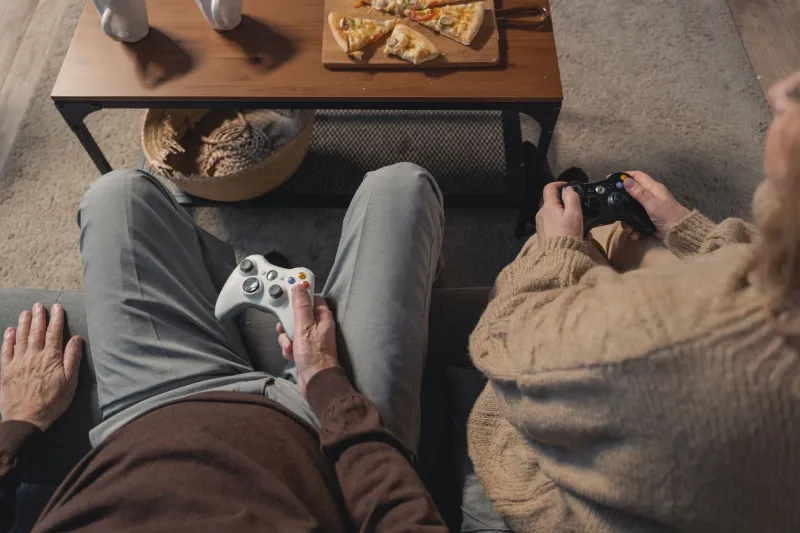
Let's be real for a second. You've got a PS5 or an Xbox Series X sitting in your living room — maybe it's been there for a year, maybe longer — and you're still booting up the PS4 or Xbox One more often than you'd like to admit. It's comfortable. The library is familiar. The console works fine. Why mess with a good thing?
Here's the problem: fine isn't the same as good, and your old hardware has been quietly lowballing your gaming experience in ways you've probably rationalized away without even noticing.
The 'Good Enough' Mindset Is a Trap
Human brains are wired to adapt. We get used to things fast — traffic noise, a lumpy mattress, a controller that drifts just a little. The same thing happens with gaming performance. If you've been running at 30fps on a last-gen machine for the past few years, your brain has essentially recalibrated to accept that as the baseline. It doesn't feel slow anymore. It just feels normal.
That's the trap. Normal doesn't mean optimal, and the gap between what you're experiencing and what's actually possible has only widened since the current-gen consoles launched. The moment you spend a few hours with a game running at a locked 60fps — or even 120fps — on a PS5 or Series X, going back to your old box starts to feel like watching a movie through a screen door.
But if you never make that comparison? You'll keep telling yourself the old hardware is holding up just fine.
Cross-Gen Development Has Been Lying to You
Here's something the gaming industry doesn't advertise loudly: for the first few years of a new console generation, most major titles are built with the old hardware in mind first. Publishers don't want to leave millions of PS4 and Xbox One owners behind — that's too much money on the table — so they develop for the lowest common denominator and then scale up.
What that means in practice is that a lot of the games you've been playing on your current-gen console have been architecturally constrained by what a 2013-era machine could handle. Open world sizes, NPC counts, physics complexity, load times, AI behavior — all of it gets quietly dialed back to fit inside the memory and processing limits of last-gen hardware. The current-gen version might look prettier, but the bones of the game are often the same.
That's starting to change now that developers are finally cutting the cord on last-gen support. Games built exclusively for PS5 and Series X — like Marvel's Spider-Man 2 or Demon's Souls at launch — show what's actually possible when nobody's designing around a hard ceiling from 2013. The difference isn't just visual. It's structural.
Frame Rate Expectations: The Invisible Performance Tax
If there's one area where last-gen hardware is quietly costing you the most, it's frame rate consistency. Your PS4 or Xbox One wasn't built to push 60fps reliably in modern titles — most games targeted 30fps as a baseline, with dips during heavy scenes that could tank performance well below that.
Now, here's where it gets psychologically interesting. Studies on human perception consistently show that smoother motion translates to faster reaction times and reduced eye fatigue during extended play sessions. When you're playing a competitive shooter or an action-heavy RPG at inconsistent frame rates, your inputs aren't just feeling sluggish — they're actually registering with more latency than they would on optimized current-gen hardware.
You've been blaming your skills. Some of it might actually be your console.
Current-gen machines running games in Performance Mode often hit 60fps with far greater consistency than their last-gen counterparts ever managed. That's not a minor quality-of-life upgrade — it's a fundamental change in how responsive the game feels under your hands.
The Library Overlap Illusion
One of the most common reasons people stay glued to last-gen hardware is the perception that the game libraries are basically the same. And honestly? For a while, they kind of were. The same titles, the same franchises, just with different resolution targets.
But that overlap is eroding fast. More and more studios are announcing current-gen exclusives, and the titles that do exist on both platforms are increasingly diverging in meaningful ways. Last-gen versions are getting features cut, visual modes removed, and performance caps that the current-gen versions simply don't have.
More importantly, the new games — the ones being designed from scratch for current-gen hardware — aren't coming to PS4 and Xbox One at all. The longer you stay anchored to last-gen, the more of the actual present-day gaming landscape you're opting out of.
What the Upgrade Actually Feels Like
If you've been on the fence, here's an honest description of what the shift tends to feel like for most gamers who finally make the switch:
Load times go from a moment to grab your phone to legitimately instant. PS5's SSD in particular is a generation ahead of what the PS4 could do — games that used to take 45 seconds to load now pop in under three.
Controller feedback on the PS5's DualSense is genuinely different. Adaptive triggers and haptic feedback aren't gimmicks — they add a layer of tactile information to gameplay that you didn't know you were missing until it's there.
Visual stability is night and day in motion. Screenshots don't capture it, but in fast-moving gameplay, the difference between 30fps and 60fps is something you feel in your chest.
Game worlds feel less like painted backdrops and more like places. Current-gen exclusives use the extra horsepower to populate environments with more density, more reactivity, and more ambient detail than last-gen hardware could ever support.
So Why Are You Still on the Old Box?
Sometimes it's habit. Sometimes it's a game save you don't want to leave behind. Sometimes it's a specific title that hasn't made the jump yet. All of those are valid in the short term.
But if you've got current-gen hardware sitting in your entertainment center and you're defaulting to last-gen out of inertia, it's worth asking yourself what you're actually holding onto. Because it's probably not the games. It's the comfort of the familiar — and that comfort has a performance cost you've just stopped noticing.
The old console isn't broken. It's just not giving you the full picture anymore. And once you spend a weekend with the current-gen version of a game you love, there's a good chance you won't be going back.
Your ninja training deserves the best hardware you've got. Stop leaving upgrades on the table.