Bring a Friend to the Couch: Your Survival Guide to Local Co-Op Gaming in 2024

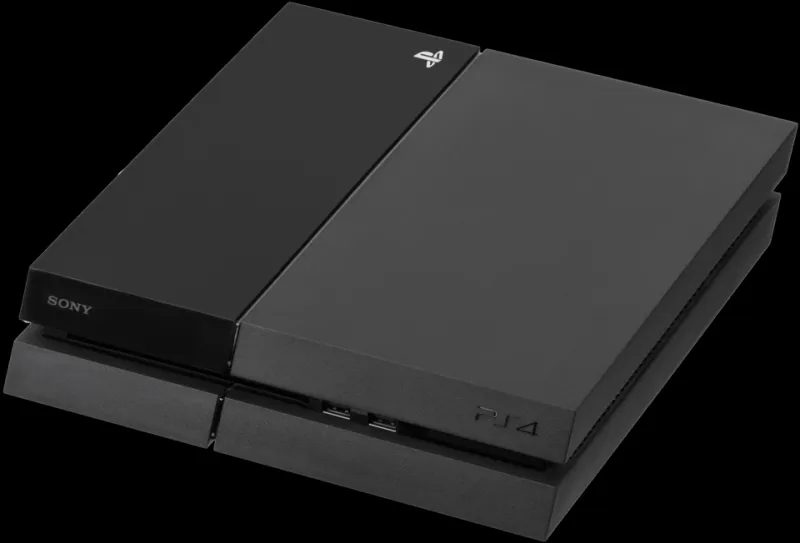
Photo: Nenad Stojkovic, CC BY 2.0, via Wikimedia Commons
There was a time — not even that long ago — when having friends over meant automatically having a gaming session. You'd crack open a bag of chips, somebody would grab the second controller off the shelf, and you'd spend three hours yelling at each other over Mario Kart or trying to beat a co-op campaign together. No lobby codes. No party chat invites. No checking if someone has the same subscription service. Just two people on a couch, one screen, and a shared mission.
Somewhere along the way, that experience got quietly phased out. And honestly? We all had a hand in it.
How Did We Get Here?
The shift happened gradually enough that most of us didn't notice until it was basically gone. Online multiplayer exploded in the mid-2000s and never looked back. Developers realized they could sell the same game to two friends separately instead of designing an experience that let them share one copy. Broadband internet made connecting remotely seamless. And the economics just made sense — online multiplayer doesn't require the extra engineering work that split-screen demands.
Split-screen in particular is a technical headache. Rendering the game twice (or four times in some modes) at playable frame rates is genuinely difficult, especially as games push graphical fidelity harder each generation. It's not that studios are lazy — it's that local multiplayer is expensive to build well and increasingly hard to justify when the vast majority of players will never use it.
But here's the part we don't talk about enough: consumer behavior drove this too. When was the last time you specifically sought out a game because it had split-screen? When did you leave a review mentioning that local co-op mode? We voted with our wallets and our attention, and we mostly voted for online-first experiences. The market responded accordingly.
That doesn't mean we have to accept it. It just means finding couch co-op gems in 2024 requires a little more intentionality.
Where to Actually Find Local Multiplayer Games Right Now
The good news: couch co-op isn't dead. It's just harder to find on the shelf. Here's where to look.
Nintendo Switch Is Still the King
Let's be real — if local multiplayer is a dealbreaker for you, the Nintendo Switch is still the platform that takes it most seriously. The hardware itself was literally designed around the concept of handing someone a Joy-Con and playing together. Titles like Mario Kart 8 Deluxe, Super Mario Party Superstars, Kirby's Return to Dream Land Deluxe, and Nintendo Switch Sports are explicitly built for people in the same room. If you've been sleeping on Switch for local play, this is your wake-up call.
Indie Games Are Carrying the Torch
While major publishers have largely stepped back from local co-op, the indie scene has embraced it wholeheartedly. Some of the best couch gaming experiences of the last few years have come from smaller studios:
- It Takes Two — A co-op masterpiece that requires two players and is built entirely around local or online cooperation. It won Game of the Year for a reason.
- Overcooked! All You Can Eat — Chaotic kitchen co-op that will either strengthen or destroy friendships. Perfect for mixed-skill households.
- Cuphead — Brutally hard, gorgeous, and one of the best two-player experiences on any platform.
- Teenage Mutant Ninja Turtles: Shredder's Revenge — A love letter to arcade beat-'em-ups with up to six players locally. Yes, six.
- Moving Out 2 — Silly, physics-based chaos that works brilliantly as a party game.
- Pode — A gorgeous, calmer co-op puzzle adventure if you want something a little more low-key.
Don't Sleep on Older Titles in Back Catalogs
PS5 and Xbox Series X/S both have access to extensive back catalogs. Games like Rocket League, Borderlands 3, A Way Out, Divinity: Original Sin 2, and the Halo Master Chief Collection all offer excellent local co-op. These titles might not be new, but they're absolutely still worth playing — and often available at steep discounts or through subscription services.
Tips for Discovering Hidden Local Co-Op Gems
Finding these games isn't always intuitive since storefronts don't exactly make local multiplayer a prominent filter. Here are some practical ways to dig them up:
Use dedicated databases. Sites like co-optimus.com are specifically designed to catalog co-op games by platform and mode, including local vs. online. It's one of the most useful resources in this space and criminally underused.
Filter by genre, not just feature. Party games, fighting games, sports titles, and beat-'em-ups are statistically more likely to have local multiplayer than open-world RPGs or first-person shooters. Adjust your browsing habits accordingly.
Check the game's detail page carefully. On the PlayStation Store and Xbox storefront, you can find player count information in the game details section. It's not always prominently displayed, but it's there.
Ask in communities. Subreddits like r/localmultiplayergames and r/coopgaming are active communities specifically dedicated to this. People there share new finds regularly.
Watch for "couch co-op" tags on Steam. Even if you're a console-first household, Steam's tagging system is excellent for identifying this feature, and many of those titles also appear on PlayStation and Xbox.
Making the Case for Why Developers Need to Bring This Back
Here's an opinion that might ruffle some feathers: the gaming industry's drift away from local multiplayer isn't just a business decision — it's a cultural loss, and developers should be hearing about it more loudly.
Couch gaming is uniquely social in a way that online play can't fully replicate. It's accessible to people who don't have reliable internet. It's the way millions of Americans were first introduced to gaming — through a sibling, a parent, a friend. It creates shared memories tied to a physical place and moment rather than a Discord server.
There's also a market argument to be made. It Takes Two has sold over 20 million copies. Overcooked! spawned multiple sequels. TMNT: Shredder's Revenge sold over a million copies in its first week. The audience is there. The appetite is real. The problem is that most major publishers have decided the investment isn't worth it, and that calculation only changes when players make enough noise.
So: leave reviews that mention local co-op. Reward studios that include it with your purchase. Talk about it in gaming communities. Request it in developer surveys and feedback forms. The loudest signal the industry responds to is sales data — so make it loud.
One Last Thing
Next time you have someone over — a roommate, a partner, a sibling, anyone — resist the urge to default to whatever's trending online. Boot up something local. Hand them a controller. Make some noise together in the same room.
Couch co-op isn't just a feature on a spec sheet. It's one of the reasons many of us fell in love with gaming in the first place. It's worth fighting to keep it around.